
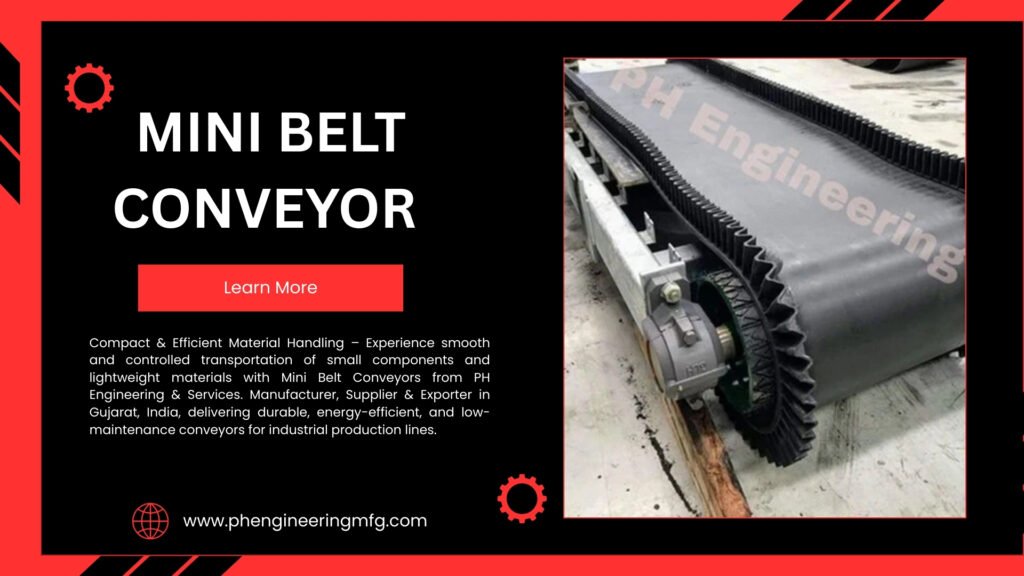
Small Scale, Big Impact: Why You Need a Mini Belt Conveyor System
In modern manufacturing, size isn’t everything—precision and speed are. While massive industrial conveyors dominate factory floors, the unsung hero of efficient production lines is the mini belt conveyor. Whether you are automating a desktop assembly station or streamlining small-package transport, these systems provide a level of agility that larger units simply cannot match.
What is a Mini Belt Conveyor?
A mini belt conveyor is a compact material handling system typically used for small parts, light products, or delicate items. Unlike heavy-duty conveyors, these are designed with a low profile, making them perfect for integration into existing automated cells, packaging machines, or lab environments.
Why Choose a Mini Belt Conveyor?
Precision Handling: Ideal for electronics, circuit boards, or pharmaceutical components that require gentle, consistent movement.
Space-Saving Design: Its slim footprint means you can fit multiple units into a confined workspace, maximizing your facility’s square footage.
Flexible Integration: Most mini conveyors are modular, meaning they can be synchronized with robotic arms, sensors, and labeling machines.
Low Energy Consumption: Designed for light-duty cycles, they offer excellent energy efficiency compared to large-scale industrial drives.
Common Applications
Electronics Assembly: Moving PCBs (Printed Circuit Boards) between testing and soldering stations.
Medical & Lab Automation: Transporting vials, tubes, or small medical devices with high hygiene standards.
Food Packaging: Ideal for handling lightweight snack bags, chocolates, or small wrapped items.
Desktop Automation: Perfect for small-scale R&D labs or custom 3D printing post-processing lines.
Key Components to Consider
When selecting a mini conveyor, look closely at these three factors:
Belt Material: Anti-static belts are essential for electronics, while food-grade, FDA-approved belts are a must for packaging.
Drive Mechanism: High-quality micro-motors ensure smooth, vibration-free operation, which is critical for delicate parts.
Control Systems: Look for compatibility with PLC (Programmable Logic Controller) systems to automate speeds and indexing.
3 Tips for Maintaining Your Mini Conveyor
Keep the Belt Aligned: Because of their size, even a slight misalignment can cause belt fraying. Check tracking tension regularly.
Monitor Debris: Small parts can easily get caught near the rollers. Implement a daily “dust and clear” routine.
Check the Sensors: If you are using photo-eyes for part counting or stopping, ensure they are clean and correctly positioned to avoid timing errors.
Conclusion
Don’t let the “mini” title fool you. A properly integrated mini belt conveyor can drastically reduce manual handling, increase throughput, and minimize errors in your production process.
Ready to streamline your small-part handling? Whether you need a custom-length conveyor or help with system integration, our team is here to help. Contact [PH Engineering] today for a consultation.