
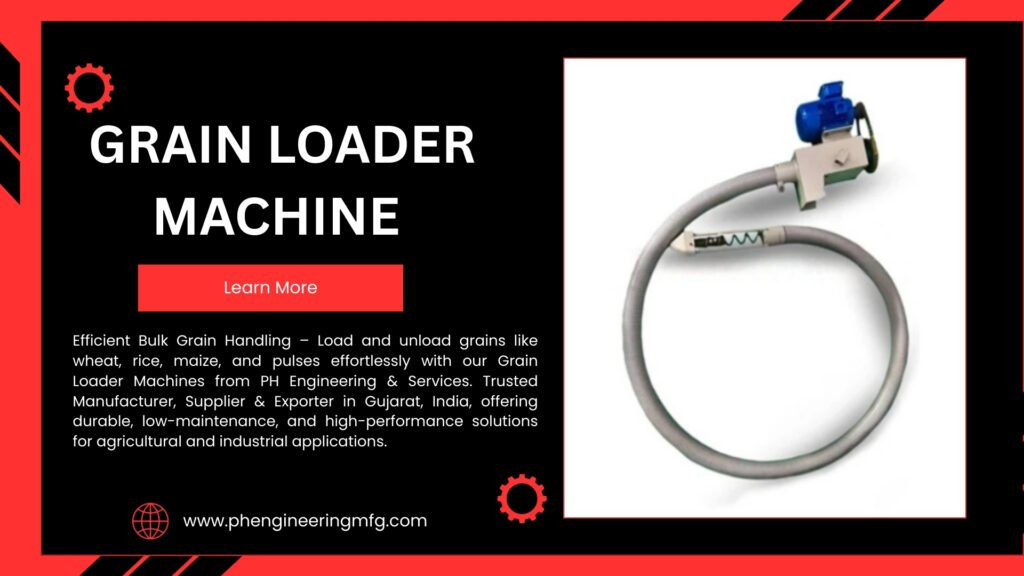
Boost Efficiency in Agriculture: The Power of Grain Loader Machines
Are you still relying on manual labor to load your harvest? In the modern agricultural landscape, time is money. Whether you are dealing with wheat, rice, corn, or pulses, a Grain Loader Machine is the smartest investment you can make to speed up your operations, reduce grain wastage, and minimize physical labor.
In this blog, we’ll explore how these machines are transforming agricultural logistics and how to choose the right one for your needs.
What is a Grain Loader Machine?
A Grain Loader Machine is a specialized conveying system designed to lift bulk grain from ground level into trucks, storage silos, or bags. Most loaders utilize an auger (screw) mechanism, providing a high-capacity, continuous flow that keeps your harvest moving quickly from the field to the storage unit.
Why Every Farm Needs a Grain Loader
Massive Time Savings: What takes manual labor hours can be finished in minutes with a mechanical loader.
Reduced Grain Spillage: Manual shoveling leads to significant loss. A closed-tube grain loader keeps your product contained from start to finish.
Labor Efficiency: It reduces the physical strain on your workforce, allowing them to focus on other critical post-harvest tasks.
Mobility: Most modern grain loaders are equipped with wheels and adjustable stands, making them easy to move around the farm or warehouse as needed.
Key Features to Look For
When shopping for a grain loader, keep these three factors in mind:
Height Capacity: Ensure the reach of the loader is sufficient for the height of your transport trucks or storage bins.
Throughput Rate (Capacity): Check how many tons per hour (TPH) the machine can handle. Choose one that matches the speed of your harvesting equipment.
Engine Type: Do you need an electric motor for indoor warehouse use, or a tractor-mounted PTO/Diesel engine for field use?
Maintenance Tips for Longer Life
Clean After Use: Grain dust and moisture can lead to rust. Always clear out remaining grain after each session.
Check the Auger/Screw: Ensure the central auger isn’t hitting the tube walls.
Belt/Chain Tension: If your loader uses a belt drive, check the tension weekly to prevent slippage during peak harvest season.
Conclusion
Investing in a Grain Loader Machine is about more than just convenience—it’s about optimizing your agricultural profitability. By automating your loading process, you ensure a faster turnaround and a higher quality of grain storage.
Looking for a durable and high-capacity Grain Loader? At [PH Engineering], we provide rugged, heavy-duty grain loading solutions built to handle the toughest harvest conditions.