What is a Screw Conveyor and Why is It Essential for Your Business?
In the industrial world, moving bulk materials from one point to another is a critical challenge. Whether you are dealing with grain, chemical powders, or industrial waste, having an efficient system is non-negotiable. This is where the Screw Conveyor (often called an auger conveyor) proves to be a game-changer.
In this blog, we’ll explore how screw conveyors work and how to select the right one for your specific facility.
What is a Screw Conveyor?
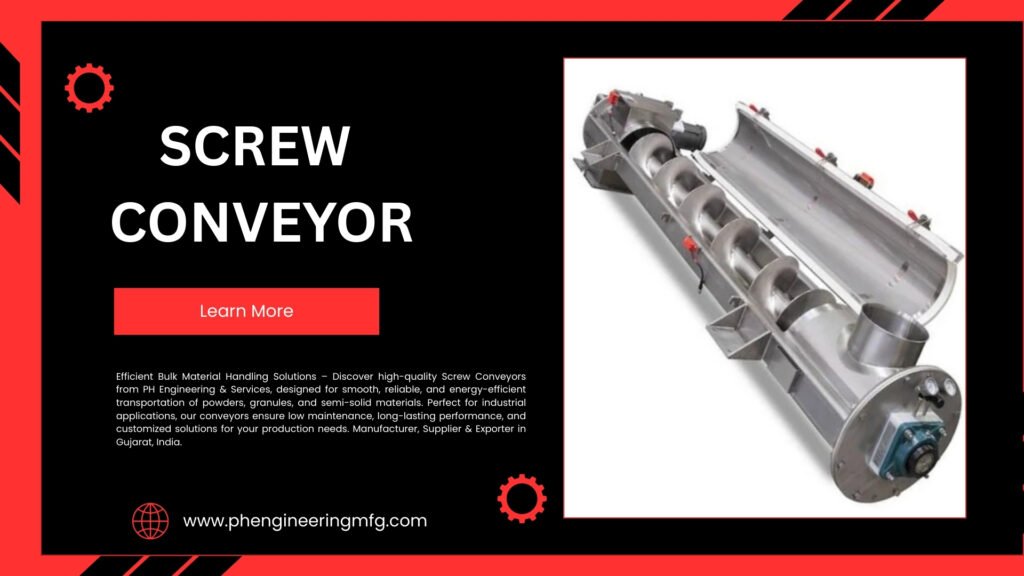
A screw conveyor is a mechanical device that utilizes a rotating helical screw blade—known as the “flighting”—housed within a stationary tube or U-shaped trough. As the shaft rotates, the helical flighting pushes the material forward, creating a smooth, continuous flow.
Key Advantages of Screw Conveyors
Space Efficiency: Their compact, narrow design makes them ideal for facilities where floor space is at a premium.
Safety and Containment: Because they can be completely enclosed, they are perfect for handling hazardous, dusty, or odorous materials without contaminating the workspace.
Versatility: They can be installed horizontally, vertically, or at an incline, depending on your layout requirements.
Low Maintenance: With fewer moving parts compared to belt or pneumatic conveyor systems, they are cost-effective and easy to maintain.
How to Choose the Right Screw Conveyor for Your Industry
The right choice depends heavily on the characteristics of the material you are conveying:
Material Type Recommended Design Powders/Granules (Grain, Flour) Standard U-Trough Screw Conveyor Sticky/Sluggish (Sludge, Food Waste) Shaftless Screw Conveyor Incline/Vertical Transport Tubular Screw Conveyor Pro-Tip: If you are handling highly abrasive materials like sand or cement, opt for hard-facing on the flighting to significantly extend the conveyor’s lifespan.
3 Essential Maintenance Tips
Regular Inspection: Check shaft alignment and bearing health once a month to prevent vibration and motor strain.
Lubrication: Follow the manufacturer’s schedule for lubricating drive units and bearings to minimize friction and wear.
Cleanout: If you work in food processing or chemical manufacturing, ensure regular sanitation cycles to prevent material buildup and cross-contamination.
Frequently Asked Questions (FAQs)
Q: Can screw conveyors handle wet materials? A: Yes! For wet or sticky materials, a shaftless design is highly recommended. It eliminates the center pipe where material typically builds up, preventing clogs.
Q: How long do screw conveyors last? A: Longevity depends on material abrasiveness and maintenance. With proper lubrication and the right construction materials, they are built to last for many years of heavy operation.
Final Thoughts
A well-designed screw conveyor is the backbone of an efficient production line. If you are looking to streamline your material handling process, choosing the right configuration is your first step toward success.
Looking for a customized screw conveyor solution? Contact the experts at [PH Engineering]. We specialize in engineering high-performance conveyor systems tailored to your unique requirements.