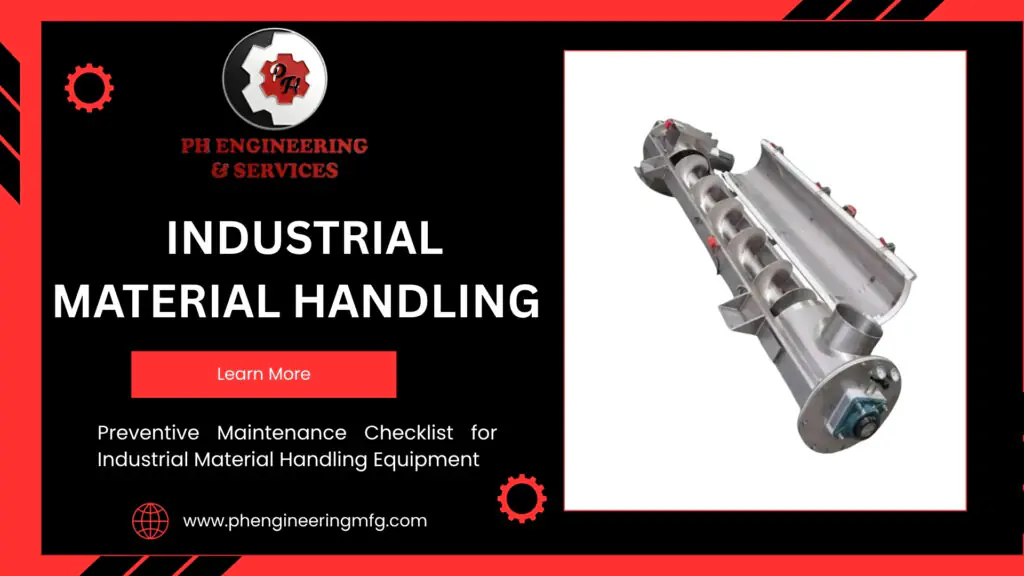
In any manufacturing facility, continuous production uptime is the primary driver of profitability. When heavy-duty machinery—such as a primary Screw Conveyor, an intensive mixing unit like a Ribbon Blender, or an elevated Bucket Elevator—unexpectedly fails, the resulting downtime can halt the entire plant, disrupt customer deliveries, and incur massive repair costs.
Relying on a “run-to-failure” maintenance strategy is a recipe for operational disaster. Implementing a structured preventive maintenance (PM) program ensures your equipment operates reliably, efficiently, and safely year-round.
1. Daily Visual Inspections and Operational Checks
Routine daily checks require minimal time from your plant crew but catch minor issues before they escalate into major mechanical failures:
Listen for Abnormal Noise: Unusual grinding, squealing, or knocking sounds often indicate a failing bearing, misaligned shaft, or metal-on-metal friction.
Monitor Vibration Levels: Excessive vibration along conveyor housings or blender troughs points toward structural imbalances, loose mounting bolts, or worn internal components.
Check for Dust and Material Leakage: Inspect shaft seals, access doors, and discharge gates for fugitive dust or material leaks, which signal worn gaskets or failing packing glands.
2. Weekly and Monthly Mechanical Maintenance
As your machinery logs operating hours, scheduled servicing of moving parts and drive systems becomes critical:
Lubrication Schedules: Greasing bearings, gearboxes, and drive chains according to manufacturer specifications prevents friction-induced heat and premature wear. Avoid over-greasing, which can attract fine dust and contaminate internal seals.
Drive Belt and Chain Tension: Inspect drive belts and roller chains for proper tension and alignment. Loose chains slip and wear sprockets down prematurely, while over-tightened belts strain motor bearings.
Flight and Agitator Clearance: Periodically check internal clearances, especially in blenders and heavy-duty augers, to ensure the screw flights or mixing ribbons are not rubbing against the housing walls.
3. Seasonal Overhauls and Deep Inspections
During planned plant shutdowns or seasonal lulls, conduct a thorough inspection of your heavy processing lines:
Inspect Internal Wear Points: High-abrasion materials gradually thin out screw flights, trough bottoms, and elevator buckets. Measure wall thickness and replace worn sections before holes or structural cracks develop.
Electrical and Safety Interlock Checks: Test emergency stop buttons, thermal overload relays, and automated PLC safety sensors to ensure your control infrastructure functions properly.
Clear Out Residue: For equipment handling seasonal agricultural crops (such as those transferred by a mobile Grain Loader Machine) or reactive chemicals, thoroughly clean and dry internal cavities to prevent caking, corrosion, or mold growth during idle periods.
Protect Your Plant Investment with Quality Engineering
A well-maintained processing line delivers maximum efficiency, extends equipment lifespans, and eliminates stressful emergency repairs. Whether you need expert maintenance advice, replacement components, or a custom-engineered Screw Conveyor designed for rugged durability, PH Engineering can help.
Contact PH Engineering today to consult with our engineering experts, discuss your facility requirements, or request a custom equipment quote.