When designing or upgrading a bulk material handling system, choosing the right mechanical conveyor is essential for maintaining smooth throughput. While traditional rigid conveying systems are the backbone of many industrial plants, complex facility layouts—crammed with structural columns, multi-level mezzanines, and tight corners—often demand a different approach.
This is where the Flexible Screw Conveyor (also known as a spiral conveyor or helix conveyor) provides a powerful alternative. Understanding how flexible systems compare to traditional rigid screw conveyors helps plant engineers optimize their factory floor space and material routing.
1. Understanding Rigid Screw Conveyors
Rigid screw conveyors utilize a solid or tubular steel housing enclosing a heavy central shaft and helical flighting.
Straight-Line Powerhouses: Rigid systems excel at moving massive volumes of heavy, abrasive, or dense materials along straight horizontal or moderately inclined paths.
Structural Durability: Built with heavy-gauge carbon or stainless steel, rigid conveyors offer exceptional longevity and can handle rigorous industrial workloads when paired with upstream equipment like a Ribbon Blender or heavy-duty storage hoppers.
The Layout Limitation: Rigid conveyors are strictly linear. Changing direction requires multiple conveyor units, transfer points, and junction boxes, which increases equipment count and potential dust-leakage points.
2. Understanding Flexible Screw Conveyors
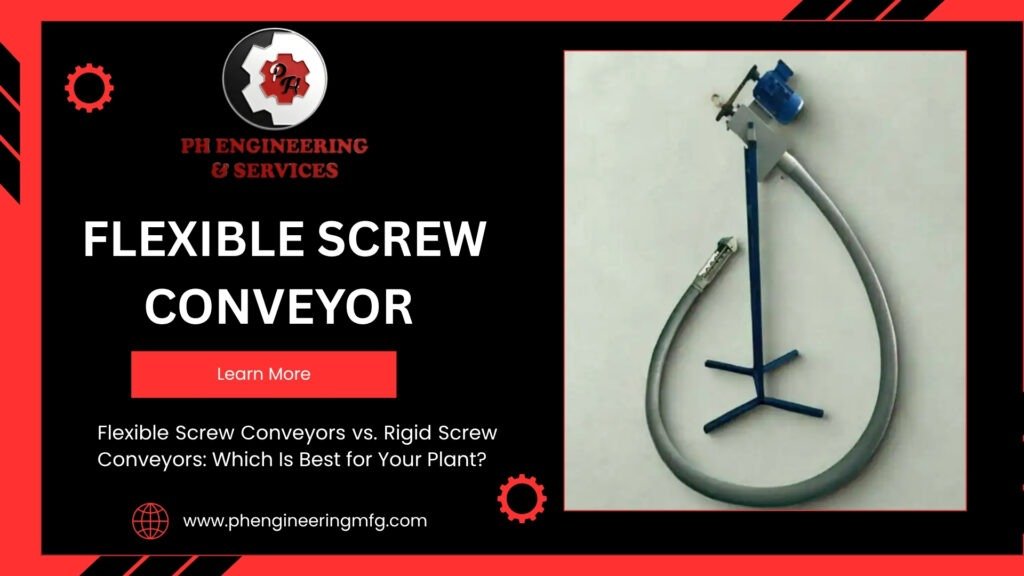
A flexible screw conveyor features a single moving part: a high-strength, spiral steel spring (or auger) that rotates inside a sealed, flexible polymer or rigid steel outer tube.
Corner-Bending Agility: Because the spiral auger is flexible, the entire conveyor can curve around obstacles, route vertically, or snake through tight factory spaces at various angles (up to 45 degrees or more depending on the configuration).
Dust-Free Hermetic Sealing: The inner auger spins freely inside a continuous, enclosed tube with zero internal bearings along the conveying path. This prevents fine powders from escaping into the factory environment, ensuring total dust containment.
Self-Centering Action: As the spiral rotates, the material naturally centers itself inside the tube, creating a dynamic column of product that flows smoothly without packing against the walls.
3. Key Factors to Consider When Specifying Your System
To determine whether your facility needs a rigid or flexible conveying setup, evaluate these operational parameters:
Evaluate Plant Layout Obstacles: If your material needs to travel from a ground-floor staging area around structural columns and up into an elevated Bucket Elevator or packaging hopper, a flexible screw conveyor eliminates the need for complex multi-conveyor transfer stations.
Assess Material Characteristics: Free-flowing powders, fine chemicals, and granules move exceptionally well through flexible spirals. However, extremely heavy, abrasive minerals or large chunks may still require a rugged, heavy-duty Screw Conveyor.
Prioritize Cleanliness: If your plant handles food-grade ingredients or pure chemicals, the absence of internal hanger bearings in a flexible conveyor simplifies cleaning and eliminates potential product-trap zones.
Optimize Your Plant’s Routing and Material Flow
Choosing the correct conveying technology ensures your facility operates with maximum efficiency, zero spills, and minimal maintenance overhead. Whether you need a standard rigid system, a flexible routing solution, or a complete multi-machine processing line, PH Engineering can help.
Contact PH Engineering today to consult with our engineering experts, discuss your facility routing requirements, or request a custom equipment quote.