
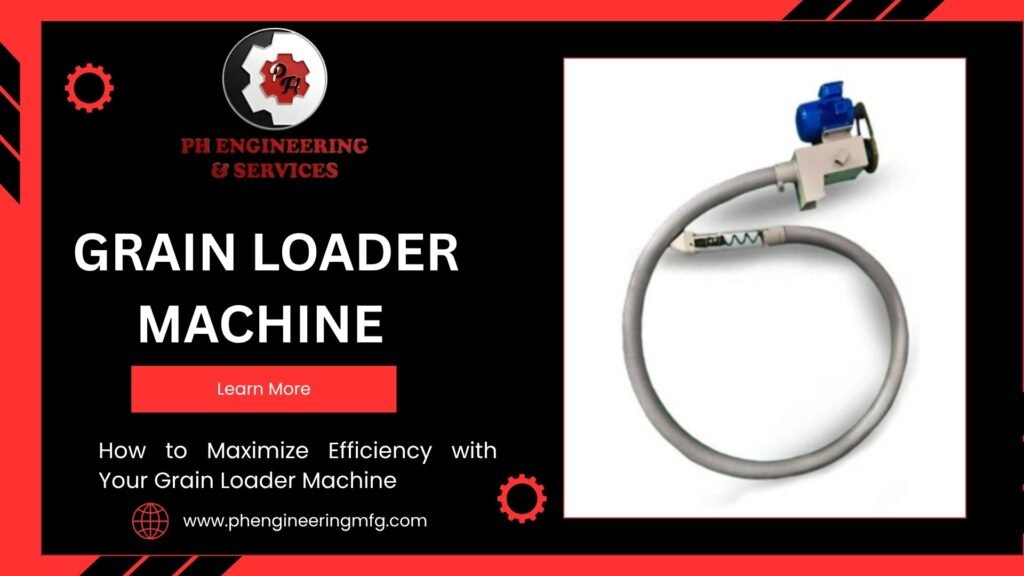
For agricultural facilities and grain storage operators, the grain loader machine is the pivot point of the entire harvest operation. When it runs at peak capacity, trucks are loaded faster and silos are filled efficiently. When it suffers from bottlenecks, the entire supply chain slows down.
At PH Engineering, we’ve worked with various agricultural setups to help them get more out of their equipment. Here are the best ways to ensure your grain loader is performing at its best.
1. Optimize the Feed Intake
The most common cause of a slow grain loader is an inefficient intake area. If the grain is not flowing evenly into the boot, the machine will “starve,” leading to inconsistent throughput. Ensure your intake hopper is sized correctly for your truck or trailer dump speed and consider using flow-control gates to maintain a steady, uniform stream of material into the conveyor.
2. Reduce Grain Breakage
High-speed loading is only useful if the product stays intact. Excessive grain breakage reduces the market value of your crop and creates dust issues.
Speed Control: Use a Variable Speed Drive (VSD) to find the perfect balance between loading speed and product gentleness.
Alignment: Ensure the loader is perfectly aligned with the silo inlet to minimize the “drop” height, which is the primary cause of grain impact damage.
3. Regular Cleanout Procedures
Grain dust is highly abrasive and can be corrosive when exposed to moisture. If you allow grain residue to sit inside the loader between seasons, it will eventually cause rust and seized components. A thorough cleanout at the end of every season is the single most important maintenance step to guarantee that your machine starts up perfectly when the next harvest begins.
4. Check for Belt/Flight Wear
Whether you are using a screw-based loader or a belt-based system, the friction surface takes the brunt of the work. Check your flights or belts for signs of thinning or uneven wear. A worn-out flight loses its ability to “push” the grain effectively, causing material to fall back into the intake rather than moving up the tube.
5. Strategic Positioning
Positioning your loader to minimize the incline angle is a quick way to increase capacity. Every degree of incline adds load on the motor and gravity-fed resistance. Whenever the layout allows, keep your loading angle as low as possible to keep your throughput high.
Is Your Loader Ready for Peak Season?
Don’t wait until the harvest trucks are lined up to discover a mechanical issue. Routine inspections and proper setup can turn a standard grain loader into a high-performance machine.
Need a high-capacity Grain Loader?
At PH Engineering, we build rugged Grain Loader Machines specifically designed for the demanding conditions of agricultural sites. We focus on durable construction and high-efficiency intake designs to help you move more grain in less time.
Contact our engineering team to discuss how we can upgrade your current grain handling capabilities.