When designing or upgrading an industrial material handling line, optimizing floor space and material flow is critical. For plants moving powders, granules, or agricultural products upward, engineers typically face a choice between two primary mechanical solutions: the Vertical Screw Conveyor and the Traditional Inclined Screw Conveyor.
While both systems utilize a rotating screw helix to lift bulk materials, their internal mechanics, spatial footprints, and application limits vary significantly. Choosing the wrong system can lead to material choking, excessive wear, or wasted factory floor space.
1. Understanding the Traditional Incline Screw Conveyor
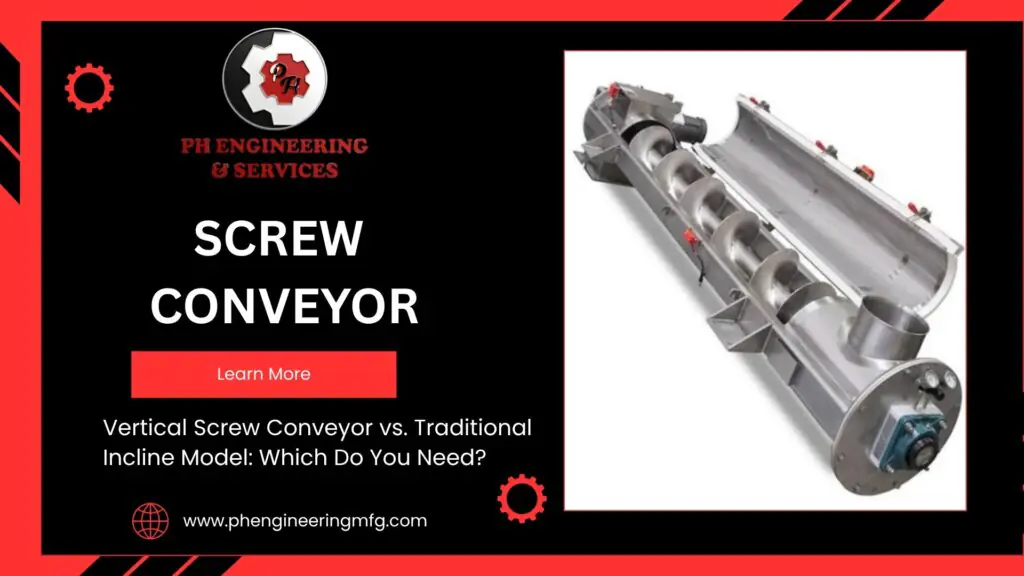
A traditional incline screw conveyor transports material upward at an angle typically ranging from 15 degrees to 45 degrees relative to the horizontal floor.
The Mechanics: Material is fed into a lower hopper and pushed upward inside a tubular or U-trough housing via a driven screw shaft.
The Gravity Factor: Because the conveyor operates at an incline, gravity constantly pulls the material back down against the flighting. As the angle of inclination increases, volumetric efficiency decreases.
Best Suited For: Moderate elevation changes where floor space is relatively flexible. They handle a wide variety of bulk products, including grains managed by a Grain Loader Machine, powders, and light aggregates reliably without requiring extreme rotational speeds.
2. Understanding the Vertical Screw Conveyor
When vertical space is at an absolute premium, a vertical screw conveyor provides a true 90-degree vertical lift.
The Mechanics: Unlike inclined models, vertical screw conveyors rely on high centrifugal forces generated by a high-speed inner screw. Material enters the base inlet, where it is immediately accelerated outward against the casing wall, creating a continuous moving column of material that travels straight up.
Footprint Efficiency: Vertical models require a fraction of the floor space compared to an incline conveyor reaching the same height. For instance, lifting material 10 feet high at a 30-degree incline requires significant horizontal runway, whereas a vertical unit takes up a footprint little wider than the casing itself.
Best Suited For: Free-flowing, non-sticky powders, fine grains, and light chemicals where factory floor square footage is restricted.
3. Which System Should You Choose for Your Plant?
To make the final decision for your manufacturing or processing line, evaluate your facility against these three operational checkpoints:
Evaluate Your Floor Space: If your facility layout is cramped and you need to feed material from a ground-floor mixer—such as a Ribbon Blender—directly up to an overhead packaging hopper, a vertical configuration saves vital square footage.
Analyze Material Characteristics: Cohesive, sluggish, or fragile materials (like delicate seeds or heavy, interlocking flakes) often suffer or pack under the high centrifugal speeds of a vertical lift. For these materials, a traditional incline model or a Flexible Screw Conveyor is often the safer, gentler choice.
Consider Complete System Integration: If your process requires multi-stage handling—such as lifting material via a Bucket Elevator or screw conveyor before sorting or secondary blending—consult with our engineering team to map out a seamless transition.
Optimize Your Material Handling Line Today
Selecting the right conveying angle ensures long-term operational reliability, minimizes equipment wear, and prevents costly downtime. Whether you need a high-capacity horizontal transfer, a space-saving vertical lift, or a custom-engineered Screw Conveyor tailored to your exact factory dimensions, we can help.
Contact PH Engineering today to discuss your project requirements, request technical specifications, or get a custom quote for your industrial processing line.