When designing a multi-level processing plant or optimizing an existing factory layout, one of the most critical spatial engineering challenges is moving bulk materials vertically. Whether you are lifting raw grains from a receiving pit, elevating mixed powders from a blending station like a Ribbon Blender, or feeding overhead storage silos, you need the right lifting technology.
While inclined screw conveyors can handle moderate height gains, plants requiring significant vertical elevation typically choose between two main systems: Vertical Bucket Elevators and Inclined Screw Conveyors. Understanding their distinct advantages helps plant engineers maximize floor space and maintain throughput efficiency.
1. Footprint Analysis: Floor Space vs. Vertical Height
The most immediate difference between the two systems is the physical space they occupy on the factory floor.
The Incline Conveyor Footprint: Because inclined screw conveyors must fight gravity along a sloped plane (typically 15 to 45 degrees), achieving a high elevation requires a massive horizontal runway. If you need to lift material 20 feet high, your incline conveyor will stretch across a large portion of your floor space.
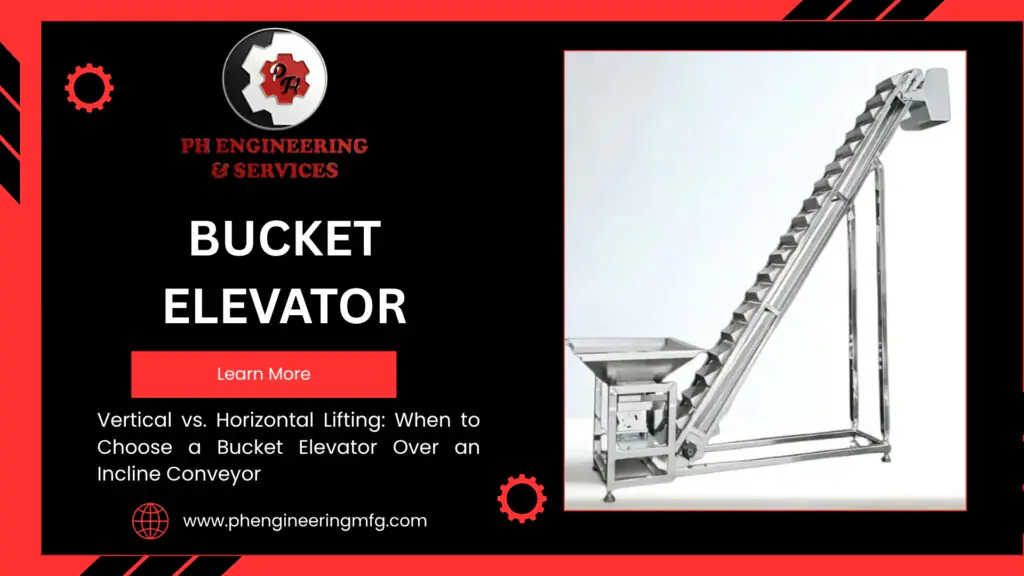
The Bucket Elevator Footprint: Bucket elevators are engineered for true vertical lifting. They utilize a continuous loop of chains or belts equipped with evenly spaced buckets that scoop and hoist material straight up. This requires a minimal, highly compact footprint, making them ideal for cramped industrial environments.
2. Height Capabilities and Throughput Efficiency
When handling high-capacity industrial plants, volume and lift height dictate the choice of equipment.
Reaching Extreme Heights: While incline screws become inefficient and prone to internal material slipping when pushed past standard angles, bucket elevators can lift bulk materials hundreds of feet straight up with consistent volumetric efficiency.
Material Fragility: For fragile materials—such as delicate agricultural seeds, pulses, or finished granules—bucket elevators offer a gentler vertical lift compared to the high-speed centrifugal forces found in traditional vertical screw configurations.
System Integration: Bucket elevators often serve as the central backbone of a processing facility. Material is typically fed into the elevator intake from a horizontal Screw Conveyor or a mobile Grain Loader Machine, hoisted vertically, and then discharged into overhead distribution spouts.
3. Key Factors to Consider When Specifying Your Line
To determine whether your facility needs an incline conveyor or a vertical bucket elevator, evaluate these operational requirements:
Assess Available Floor Space: If your factory floor is congested with machinery, a vertical bucket elevator preserves valuable square footage by utilizing vertical airspace.
Evaluate Material Characteristics: Free-flowing grains, powders, and manufactured pellets move exceptionally well in bucket elevators. However, sticky or wet sludges that cling to bucket walls may require specialized scraper mechanisms or alternative conveyor designs.
Plan Your Complete Flow: Ensure that your discharge points align cleanly with downstream equipment, such as storage silos, packaging hoppers, or secondary processing lines.
Optimize Your Plant’s Vertical Handling
Choosing the correct material lifting solution ensures seamless plant operation, protects product integrity, and maximizes your factory’s layout efficiency. Whether you need a high-capacity Bucket Elevator, a durable Screw Conveyor, or a complete multi-machine processing line, PH Engineering can help.
Contact PH Engineering today to consult with our engineering experts, discuss your facility requirements, or request a custom equipment quote.