In chemical, pharmaceutical, food, and mineral processing, achieving a perfectly homogeneous mixture of dry powders, granules, or pastes is critical to product quality. Even minor inconsistencies in batch mixing can ruin an entire production run.
While heavy-duty transfer equipment like a Screw Conveyor moves your raw materials efficiently from point to point, the heart of your mixing operation is the Ribbon Blender. Mastering its operation ensures maximum blending efficiency, short mix times, and zero dead zones.
1. How a Ribbon Blender Achieves Homogeneity
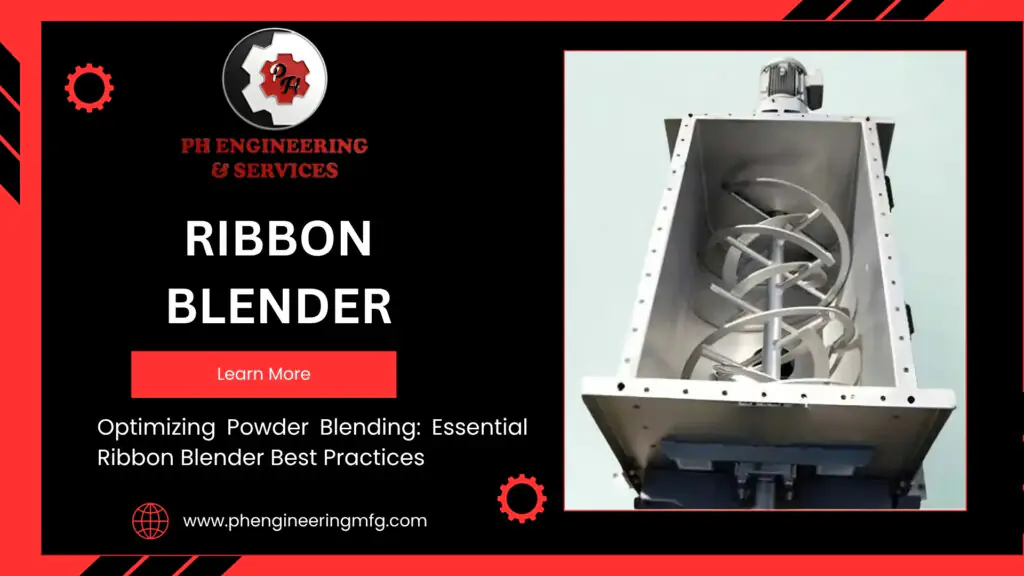
The secret to a ribbon blender’s effectiveness lies in its specialized agitator design, which features concentric outer and inner helical ribbons mounted on a central horizontal shaft.
The Counter-Flow Action: As the shaft rotates, the outer ribbon moves material steadily toward the discharge valve, while the inner ribbon moves material in the opposite direction.
Continuous Radial and Axial Movement: This opposing, simultaneous flow causes the powder particles to tumble, shear, and cross paths continuously, creating a thorough, high-speed blending action without grinding or degrading fragile ingredients.
2. Best Practices for Loading and Batch Sizing
Maximizing blender efficiency starts long before you press the start button. Proper loading technique is essential for consistent batches.
Strictly Adhere to Capacity Limits: Just like a Screw Conveyor requires precise trough loading rates, a ribbon blender should never be overloaded. Maintain fill levels that allow the top layer of powder to roll freely over the center shaft (typically filling the trough just slightly above the outer ribbon height).
Pre-Blending Minor Ingredients: When adding trace additives or active ingredients to a massive base powder batch, pre-mix minor components or layer them near the center of the intake stream to prevent segregation and ensure uniform distribution.
3. Streamlining the Discharge and Downstream Transfer
Once the blending cycle is complete, getting the mixed product out of the vessel quickly and cleanly prevents bottlenecks in your factory workflow.
Preventing Dead Zones at the Valve: Ensure your discharge valve is properly seated and flush with the trough floor to prevent dead pockets where unmixed powder can accumulate.
Connecting to Secondary Equipment: Once the batch is released through the blender valve, it typically drops directly into a sealed hopper. From there, it can be smoothly fed into a horizontal or inclined Screw Conveyor for transfer to packaging, or lifted vertically using a high-capacity Bucket Elevator.
4. Maintenance Checklist for Long-Term Reliability
Routine upkeep protects your drive components and ensures your blending line operates without unexpected downtime:
Inspect Agitator Clearance: Regularly check the clearance gap between the outer ribbon edges and the blender trough wall to prevent metal-on-metal friction or product smearing.
Maintain Shaft Seals: Because fine powders can easily migrate past standard seals into bearing housings, utilize air-purged shaft seals or specialized packing glands to protect your drive assembly.
Gearbox and Drive Upkeep: Follow structured lubrication schedules for heavy-duty industrial gearboxes to handle the high starting torque required when mixing dense batches.
Upgrade Your Powder Processing Capabilities
Combining precise mixing technology with reliable material transport ensures your plant operates at peak efficiency. Whether you need a custom-engineered Ribbon Blender, a reliable Screw Conveyor, or a complete multi-machine processing line, PH Engineering can help.
Contact PH Engineering today to discuss your plant requirements, consult with our engineering team, or request a custom equipment quote.