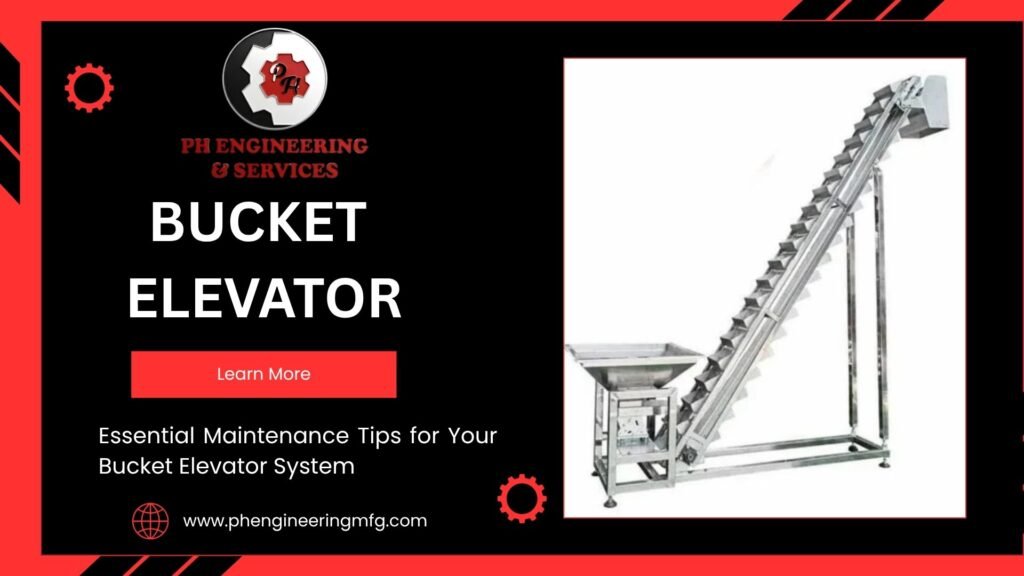
When it comes to vertical material handling, the bucket elevator is the most reliable workhorse in an industrial facility. Whether you are handling grain, minerals, or chemical powders, it is designed to move massive volumes of material with minimal energy.
However, because these systems operate under high tension and constant vertical strain, they require specific maintenance to remain safe and efficient. At PH Engineering, we’ve summarized the most important checks to help you avoid common failures.
1. Monitor Belt Tension Regularly
The most frequent issue we see with vertical elevators is belt slippage. If the belt is too loose, the drive pulley will lose its grip, causing the belt to slip and burn. If it is too tight, it places unnecessary strain on the head and tail shaft bearings. Check your tensioner periodically to ensure the belt is aligned and operating at the manufacturer’s recommended tension.
2. Inspect Buckets for Damage
Buckets are constantly scooping material, and over time, they can become bent, cracked, or loose. A single damaged bucket can create an imbalance in the system, leading to vibration or, worse, it can catch on the casing and cause a massive blockage. If you see a bucket that is tilted or has damaged edges, replace it immediately to protect the structural integrity of the elevator.
3. Keep the Boot Section Clean
The “boot” (the bottom section) is where material is loaded. If material is allowed to build up at the bottom, it can force the buckets to dig into a packed pile rather than scooping freely. This leads to broken buckets and a spike in motor load. Ensure your discharge and intake points are clear and that your cleanup doors are sealed properly.
4. Listen for Bearing Noise
Bucket elevators rely on heavy-duty bearings at the head shaft to carry the full weight of the vertical load. Use a simple vibration or sound check during your weekly walkthroughs. If you hear a rhythmic “chirp” or “grind,” it is often the first sign of a failing bearing. Replacing a bearing during a scheduled shutdown is cheap; dealing with a seized shaft during a production run is expensive.
5. Check for Material Spillage
If you notice material spilling back down the casing, it is usually a sign of incorrect belt speed or poor discharge geometry. If the bucket speed is too slow, the material will fall out before reaching the discharge chute. Adjusting your variable speed drive (VSD) to match your specific material density will often solve this issue instantly.
Ensuring Reliable Vertical Transport
A well-maintained bucket elevator can last for decades. The key is catching minor wear and tear before it becomes a major mechanical failure.
Need a robust vertical handling solution?
At PH Engineering, we specialize in building durable Bucket Elevators engineered for high-volume, reliable lifting. Whether you are upgrading an existing line or setting up a new facility, our team can help you select the right configuration for your material needs.
Contact our engineering team today for a consultation on your material handling setup.