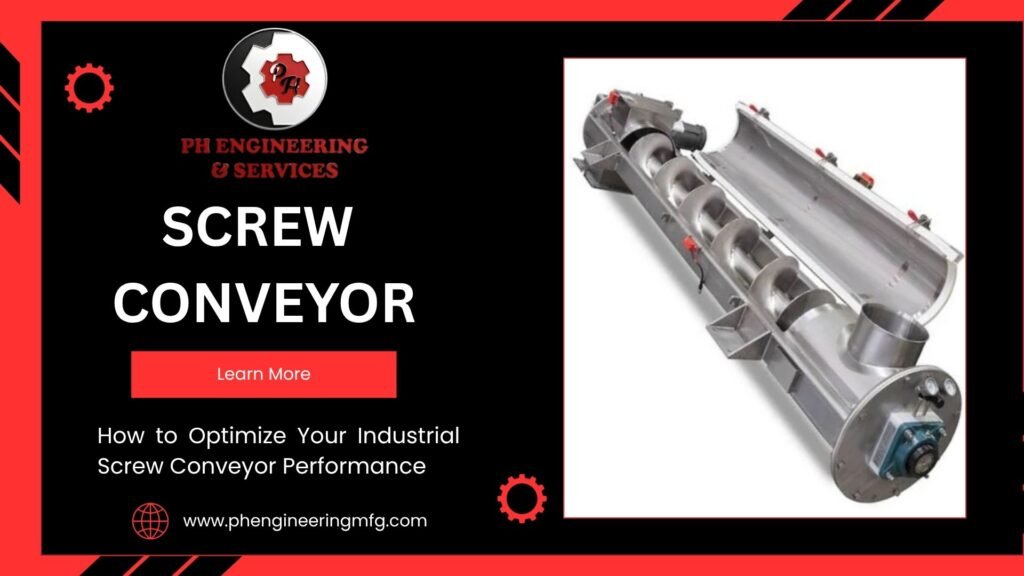
In many manufacturing plants, the screw conveyor is the unsung hero of the production line. When it works perfectly, material moves seamlessly from one process to the next. When it doesn’t, your entire operation can grind to a halt.
As manufacturers here in Ahmedabad, we at PH Engineering often help clients solve common performance issues. Here are the most effective ways to optimize your conveyor system for maximum efficiency.
1. Respect the Trough Loading Limit
A common mistake is trying to move as much material as possible by filling the conveyor trough to the top. Do not do this.
An overloaded conveyor creates excessive pressure on the flights and the central shaft. Instead, aim to keep your trough loading between 30% and 45%. This allows the material to flow smoothly without causing the motor to strain, which directly increases the lifespan of your machine.
2. Match the Flight Pitch to Your Material
Not all materials are the same. A fine powder behaves very differently from grain or abrasive industrial minerals.
For free-flowing materials: A standard pitch works perfectly.
For sluggish or sticky materials: A shorter or “cut flight” design is often better to prevent the material from clumping or bridging inside the conveyor.
Using the wrong flight design for your specific material is the #1 cause of “slugs” or blockages in the system.
3. Monitor Your RPM
Faster isn’t always better. If your auger conveyor runs at an unnecessarily high RPM, you are just causing more friction and heat. High heat can damage your product—especially if it is food-grade or chemical-sensitive—and it accelerates the wear on your hanger bearings. Find the “sweet spot” where your throughput requirements are met without pushing the motor beyond its rated capacity.
4. Regular Hanger Bearing Inspection
Because the hanger bearings support the weight of the screw, they are the most critical wear point. If you hear a slight “clicking” or rhythmic grinding, check your bearings immediately. Replacing a bearing is a simple, low-cost maintenance task; ignoring it can lead to a bent shaft or a destroyed conveyor casing.
5. When to Call in a Professional
Your screw conveyor should be an asset, not a daily chore. If you find yourself constantly adjusting the motor or clearing blockages, your current system design might not be matched to the material density you are handling.